
Revival in Fashion

As the textile traditions of England and France faded from their aristocratic origins and domestic heyday, they found new life—not in parlours or drawing rooms, but on the runways of global fashion houses. The enduring beauty of Toile de Jouy, chintz, and antique florals wasn’t lost to history; instead, it was carefully reimagined and reintroduced to new generations, transformed into a form of wearable nostalgia.
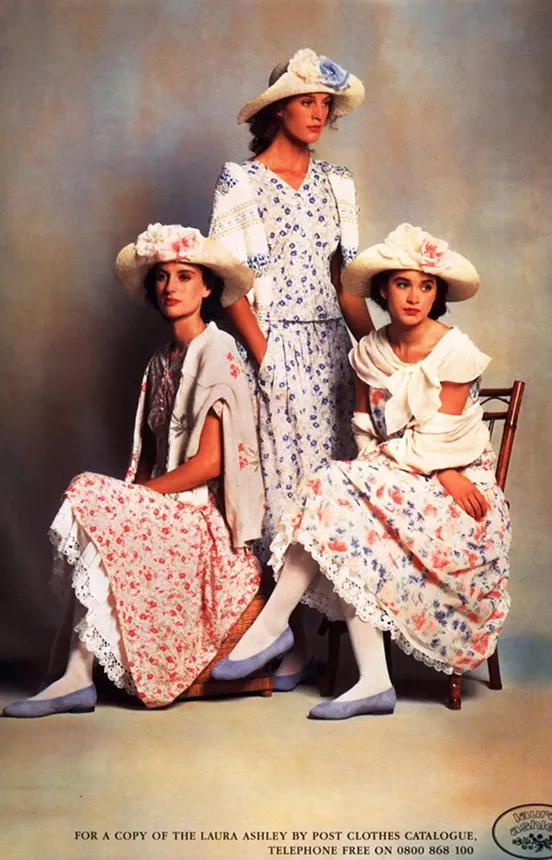
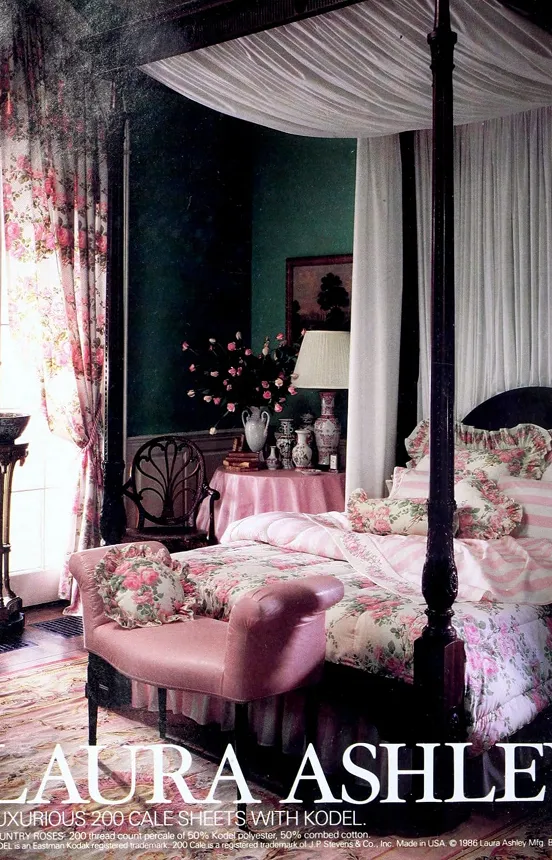
In the 1970s and 1980s, few brands captured this romantic sensibility more vividly than Laura Ashley. Known for her flowing prairie dresses, puffed sleeves, and delicate prints, Ashley’s designs channeled the warmth of English country living—drawing directly from the visual vocabulary of Victorian wallpaper, cottage chintz, and antique quilting. Her prints—rose bouquets, climbing vines, stylized thistles—weren’t just retro—they were deeply sentimental, evoking a longing for gentler times and slower living. What Laura Ashley did was revolutionary in its restraint: she made femininity and tradition fashionable again, even during the rise of punk and power dressing.
In more recent years, fashion house Erdem has taken up that mantle with a modern, high-fashion twist. Renowned for collections that feel part museum, part dreamscape, Erdem Moralıoğlu routinely mines the past to create clothing that feels both nostalgic and progressive. His use of chintz-inspired prints and vintage floral arrangements, often layered onto tailored silhouettes or sheer organza, showcases a reverence for historical textiles—but never in a way that feels costume-like. Instead, his designs blur the line between fashion and art, proving that traditional English and French motifs can still turn heads on modern catwalks.
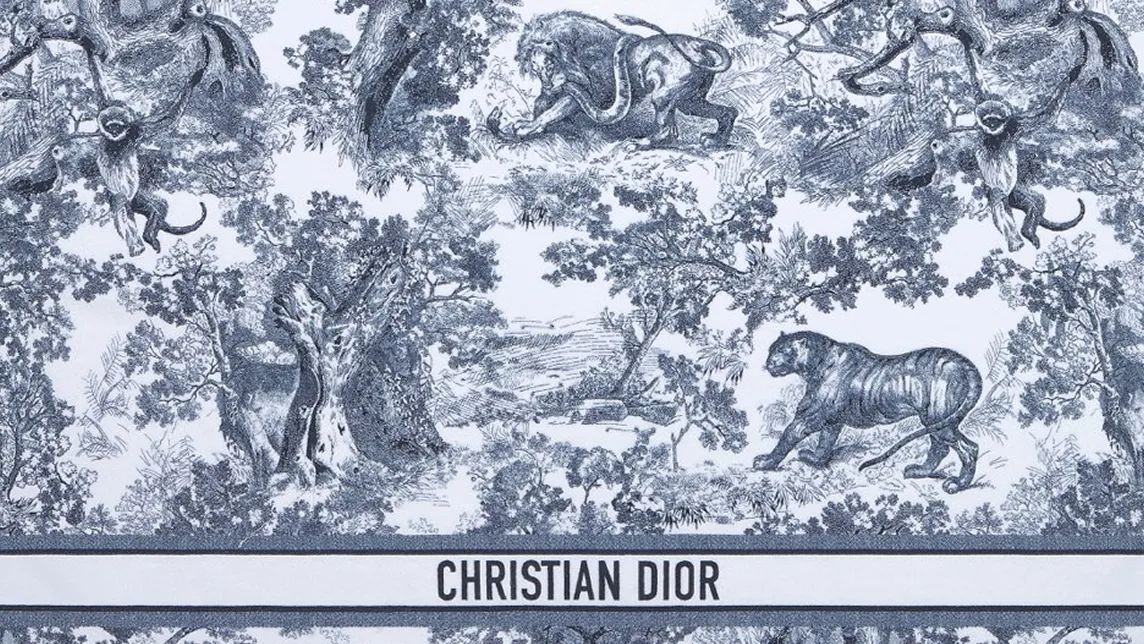
And perhaps no house has embraced the romantic narrative power of Toile de Jouy more than Dior under creative director Maria Grazia Chiuri. In her hands, Toile isn’t just preserved—it’s radically repositioned. The classic monochrome scenes are splashed across corset dresses, sneakers, handbags, and even activewear. Some feature tigers and serpents in place of pastoral lovers—feminist reinterpretations of an old-world fantasy, daring viewers to reexamine the stories these patterns tell. By embedding this historical print into modern silhouettes and accessories, Chiuri not only celebrates its beauty, but pushes its boundaries—from royal boudoirs to streetwear culture.
In each of these cases, we see a pattern—literally and figuratively: a deep affection for the past, combined with a refusal to let it sit quietly on the shelf. Designers are no longer content to merely reference heritage—they are activating it, translating tradition into movement, visibility, and modern appeal.
In the digital age, the romantic allure of English and French textiles has found a new, wildly enthusiastic audience—not in fashion ateliers or museum archives, but on TikTok and Instagram. Through hashtags like #cottagecore, #grandmillennial, and #maximalistdecor, younger generations are reviving motifs once associated with grandmother’s sitting room and transforming them into aesthetic movements fueled by creativity, self-expression, and a deliberate rejection of modern minimalism.
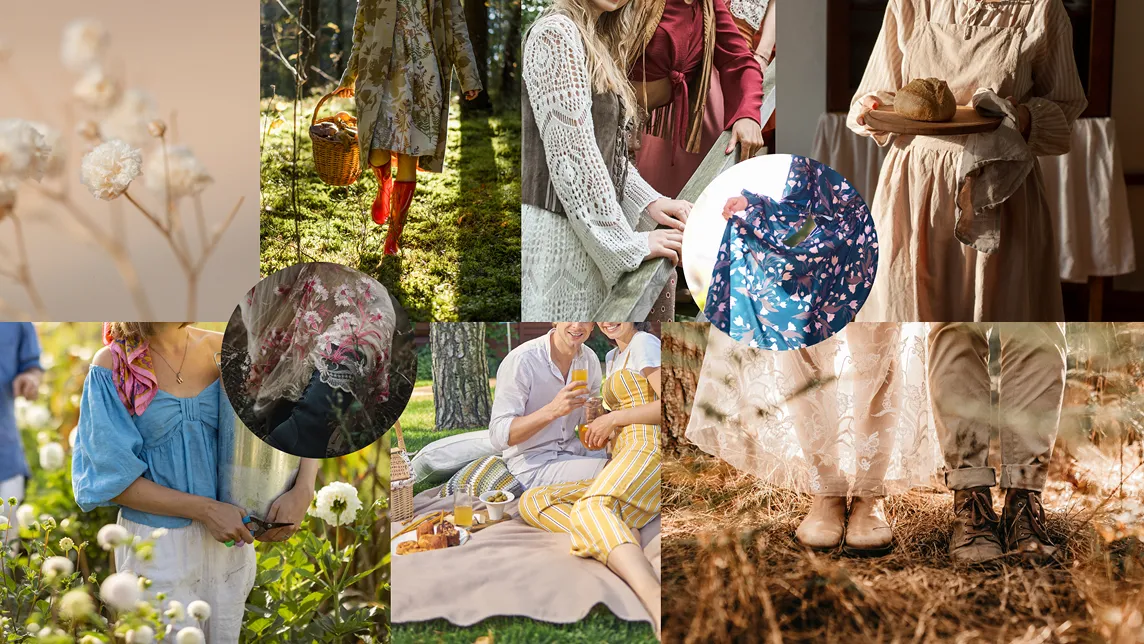
At the heart of cottagecore lies a yearning for simplicity—not sterile minimalism, but pastoral warmth. Think English countryside cottages, fresh-baked scones, floral curtains, and days spent reading in a chintz-covered nook. In this fantasy, wallpaper florals, Toile de Jouy, vintage lace, and quilted patterns are not just nostalgic—they’re empowering. They create a space where softness, sentiment, and slowness are valued, where tradition becomes a form of comfort rather than conformity.
In tandem, maximalism has risen as a countercurrent to the clean lines and muted palettes that once defined aspirational design. Bold, layered interiors now feature everything from toile-covered armchairs to damask drapes and gallery walls of inherited portraits. The so-called “grandmillennial” trend champions this fusion—celebrating inherited patterns, pleated lampshades, ruffled edges, and fabrics that feel unapologetically lived-in.
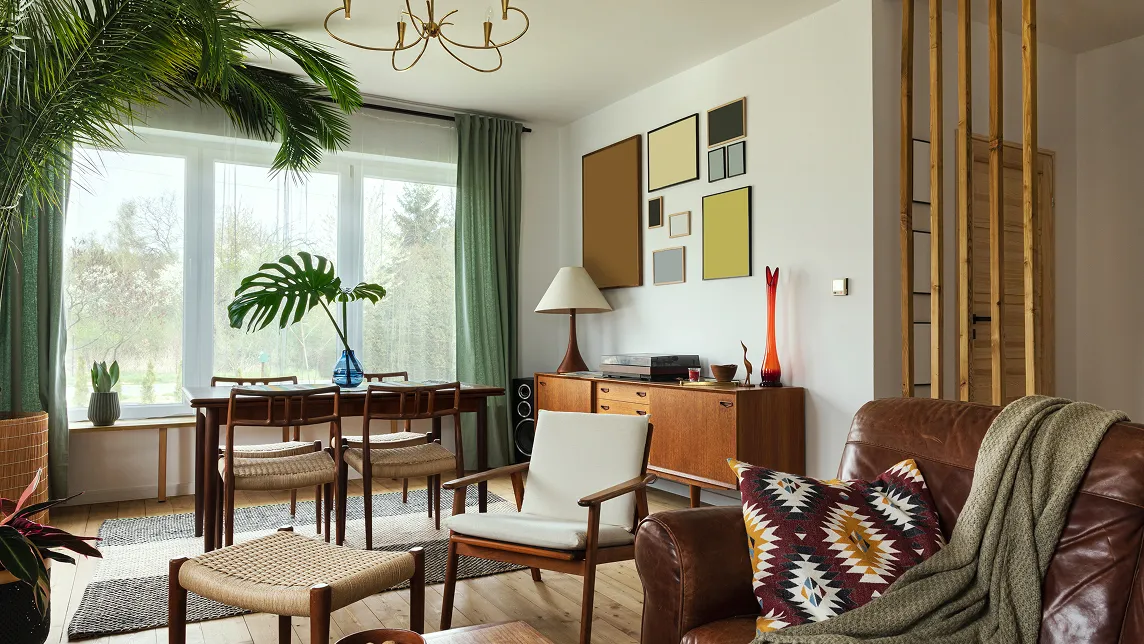
In both movements, nostalgia becomes a form of rebellion. A floral print once dismissed as fussy is now celebrated as cozy and intentional. Wallpaper that once belonged to a great-aunt’s dining room becomes a statement wall in a downtown apartment. It’s a way of reclaiming softness and sentimentality in a world that often prizes sleek detachment.
What’s especially striking is how these trends rely on textiles to build identity and atmosphere—whether it’s a cottagecore dress styled with a lace collar and Laura Ashley boots, or a maximalist living room exploding in brocade cushions, velvet curtains, and embroidered tablecloths. These aesthetics are no longer niche—they’re mainstreaming.
And behind the scenes, designers are embracing this revival not just emotionally, but technically. With digital tools, heritage-inspired motifs can be revived, recolored, scaled, and made production-ready in minutes. What once required screen printing or hand-loomed precision can now be simulated, tested, and applied to fabric swatches or digital renderings instantly.
As the boundaries between interior, fashion, and digital styling blur, these tools allow designers to translate nostalgic vision into polished, scalable products. The charm of the past, once locked away in attics and archives, is now reshaped in pixels—ready for bedrooms, runways, and Instagram grids alike.
From Laura Ashley dresses to #cottagecore interiors, one truth remains constant: it’s the pattern that sets the mood. But unlike the block printers and hand weavers of centuries past, today’s textile designers work in pixels and precision curves—using digital tools to revive history, layer emotion, and push creative boundaries.
Modern platforms like NedGraphics haven’t replaced the loom, they’ve enhanced the design process, reducing the need for physical samples, increasing precision in repeat construction, and ensuring that what you see on screen is what you get in production. Designers can now digitally map Toile de Juoy repeats, scale chintz florals, or recolor damask patterns with confidence, knowing the final product will stay true to their vision–-whether it’s printed on silk, cotton, or upholstery.
With tools like Texcelle or the NedGraphics Design & Repeat plugin for Adobe Illustrator, creators can layer details, manipulate composition, and test endless variations in real time. Simulated weave structures and tonal effects bring the shimmer of brocade to the softness of lace to life without a single thread needing to be set.
Even color, once restricted by dye availability and printing technique, is now infinitely modifiable. Designers can create digital colorways that pay homage to historic palettes or chart entirely new emotional territories—all while ensuring print accuracy across fabric types and production methods.
This digital evolution doesn’t replace the past—it respects and reactivates it. Today’s designers are no longer bound by the technical limitations that once defined textile production. Instead, they’re free to draw from centuries of pattern history and reinterpret those legacies through a modern lens, whether for fashion, interiors, or digital renderings.
And as we’ll see in the next section, the result is more than just beautiful fabric—it’s a lesson in storytelling. Because behind every damask flourish or floral repeat is a message. And behind every designer who revives them is a desire to teach, preserve, and create meaning.
Don’t Miss the Finale:
From fashion runways to Instagram feeds, the romantic motifs of French and English textiles have found powerful new voices in the modern world. Today’s designers aren’t just reviving patterns—they’re redefining what heritage looks like in a digital age.
In Part 4, we’ll close out this mini-series by looking at how these historical designs function as tools for education, sustainability, and storytelling and how digital platforms are helping preserve these traditions for the future.
Follow us on social media to get notified when the final chapter of this inspiring four-part series goes live.